Confidence vs Ego
In a society obsessed with self image, we’ve confused ego for self-worth.

People often use confidence and ego interchangeably but they are different. This article is going to explore how arrogance develops from an inflicted ego and why true confidence is built internally, rather than performed externally.
Understanding Ego
Ego’s definition depends on the context.
There is a healthy ego, which is motivated by self-identity and determination. This often channels into self awareness, self-fulfillment, a sense of identity.
However, there is also an unhealthy ego.
This is motivated by insecurity. It then channels into a superiority complex, need for validation, competition and self-image. Unhealthy ego (which is often what ego is generally associated with) is very different from confidence.
Why do some people constantly need validation/ recognition?
The need for validation and recognition stems from insecurity. When there is no healthy sense of self, we tend to exert unhealthy behaviours.
Self esteem is like a foundation to a building being built - we are the buildings. If the foundation of a building isn’t solid and does not contain the materials such as portland cement or crushed gravel, then the building is sure to fall. That is exactly how we are built up, through our self esteem. If we do not have a solid foundation, such as positive thinking, self assurance, self confidence or a sense of identity then we are sure to break down.
Therefore, the constant need for validation and recognition stems from insecurity - an unhealthy sense of self.
Having insecurities and being insecure are different things. Having insecurities are things that make you feel bad or even shameful from time to time but it does not strip away your sense of self-worth or confidence. However, being insecure means that you have insecurities but instead of them coming up to the surface and being drowned out, they rule your life instead.
The decisions you make, your thoughts, the way you treat people, the way you treat yourself - all ruled by those insecurities.
That is what makes it unhealthy and that is what makes us hungry for validation and recognition.
Thinking that receiving validation from people will somehow make us less insecure is false.
It doesn’t.
It enables it.
It enables it because we believe that if people perceive us better than we perceive ourselves, our insecurities will vanish. However, insecurity stems from within us, not from others.
This means that the solution to being insecure is facing it.
Admitting to ourselves that we are flawed and imperfect, humbles us into acceptance and eventually transformation.
Unfortunately, for many of us, ego stands in the way. Not wanting to believe that we are flawed or imperfect sucks us deeper into an unhealthy sense of self. We end up believing that we are superior to imperfection and then allow ourselves to avoid the truth.
Ego is caused by not wanting to admit that we are insecure, this then leads us to crave validation from others so that their perception of us, convinces us otherwise.
Why can’t certain people admit they’re wrong?
Social psychologists, Carol Tavris and Elliot Aronson explained in their book Mistakes Were Made (But Not By Me) that our brains often use self-justification to ease the discomfort of making mistakes.
To maintain our sense of worth (being smart, moral, capable) we subconsciously rewire our memories and invent realities that absolve us of blame. This is as a result of ego; not wanting to admit to flaws. Instead of us understanding that mistakes are simply just a behavioural error, we measure it as a sign of incompetence.
Why can’t people admit they’re wrong? Ego. That’s the answer.
We tend to be prideful and dismissive whenever we are faced with complex and conflicting emotions.
When a reality that we are used to is being challenged, we force our minds to stick to what we believe in because we do not want to be humble enough to go through the process of change. Therefore, people who usually believe they are morally upright, or great at their job are faced with criticism they don’t take it on the chin, they wallow and they reject.
Why do they wallow? Well, because those qualities - being morally upright and being good at your job have been a defining factor in their self esteem. Therefore, how well they treat people or how great a brief goes often determines how good or badly they view themselves - this is unhealthy, this is insecurity, this stunts their growth.
Therefore whenever they receive criticism on those things that equate to their self worth, it beats them down. In order to avoid the pain of being beaten down, they reject - this is ego. They close a blind eye to their mistakes and pretend as if it does not exist, this then limits their improvement and keeps them static.
What Confidence Really Is
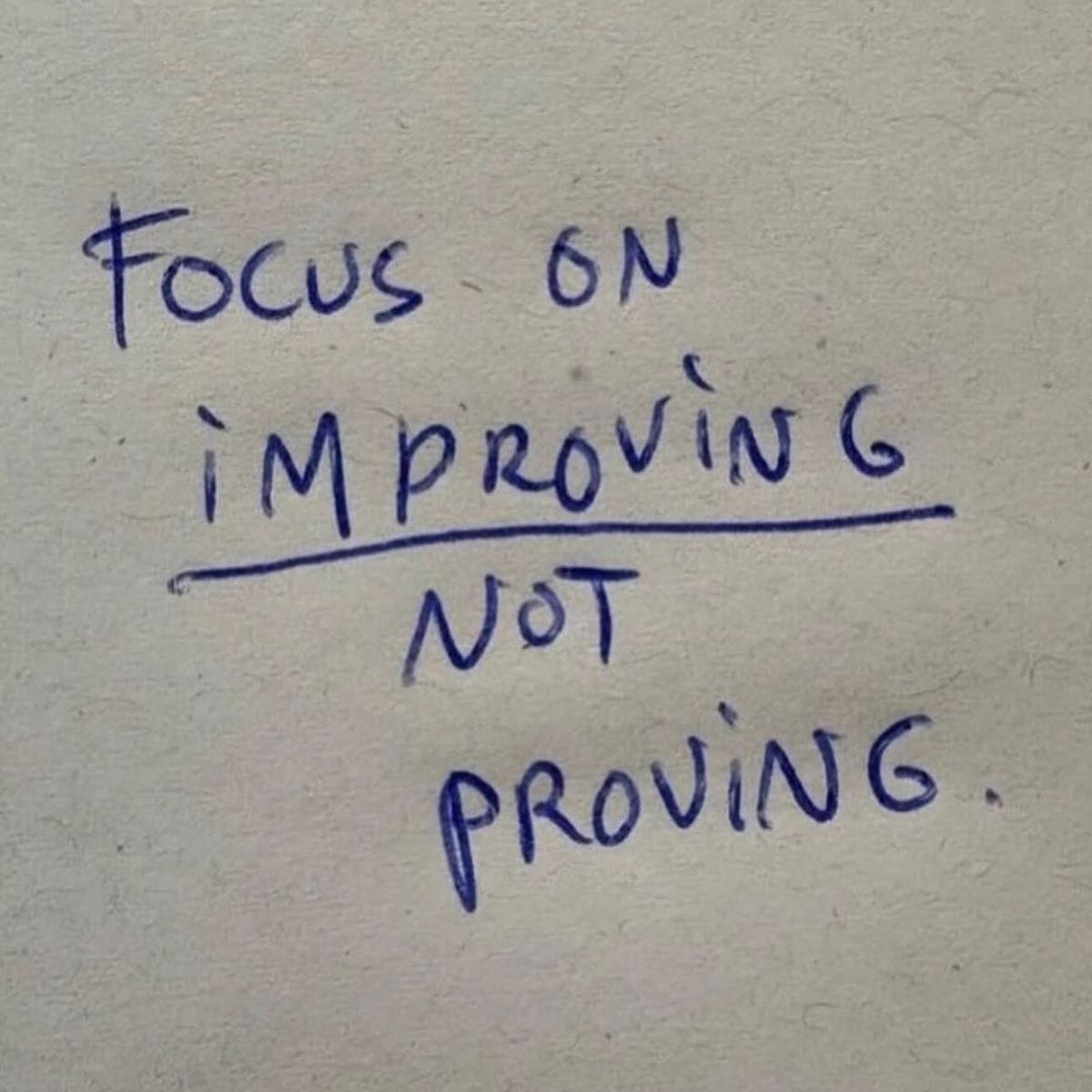
Confidence is not having to be the loudest in the room to get noticed, or insisting you’re right when you know you’re wrong, or being butt hurt when someone calls you out. It’s paying attention to the people who get cut off from conversation, it’s apologising despite your ego being bruised, it’s being reflective and aware of your actions, it’s not having to prove you’re smart by winning every argument.
Lao Tzu states that “because one believes in oneself, one doesn't need to convince others.”
This essentially means that confidence does not seek attention or validation, it simply is.
We tend to want to prove a point when people underestimate us or belittle us. A quote by Eleanor Roosevelt states that “No one can make you feel inferior without your consent.” This insinuates that we are in control of how we feel, react, and treat ourselves.
In simple terms, confidence is a belief in oneself. It is trusting in your own abilities, values, motivations. Without confidence, we second guess, we compare, we degrade ourselves and all these lead to insecurity.
An observation by Shakespeare is that “Empty vessels make the greatest sound.” This suggests that those with the least substance feel the need to announce themselves. It symbolises someone who has no self-security or self-worth. Therefore, because there is little confidence within them, they feel the need to compensate by being loud, seeking attention, boasting, constantly trying to prove importance.
A full vessel does not need to make noise because it already possesses value.
Ego is loud and seeks attention for validation. It wants applause, recognition and needs to be deemed as superior over others. But confidence comes from internal security. A confident person does not need to boast about being confident or secure, they have nothing to prove; their actions speak louder than their words.
Why Society Rewards Ego
The main reason why Ego gains more attention than confidence is because of Social Media.
Society admires visibility and a superficial definition of success, that’s why celebrities get so much attention.
They represent everything that we want to be, they are a fantasy, an escape from real world problems.
This leads to us microanalysing their every move, it makes us parasocial about how they dress, eat, talk, sleep, leading us to mirror it.
We take their rude moments and label it as “ICONIC” These things promote a false representation of reality, morality and success; leaving people to fish for ego rather than confidence. We prioritise image over kindness, consideration and humility.
Because we look up to these people so much and their lives are being put in our faces, we want to be on the same level and so we idolise our jobs, our relationships, our body and leave out things that matter, like our soul, our heart, our mind, even our health.
Unfortunately, this has caused people to value performance rather than authenticity.
People often feel the need to be categorised as something “cool” or “revolutionary” before they are worthy of acknowledgement.
This warps our definition of confidence because we feel like we have to be worth something to feel it, leading confidence to become performative instead of genuine.
Social media defines how we define ourselves, our self-worth is measured by how much we are liked or idolised - ego becomes easier to navigate than confidence.
Because we are constantly paying more attention to our image than our character, we fail to realise when we mentally deteriorate. Good character becomes a choice and not a responsibility because all that matters is how celebrated we are, not how impactful we are. Sounds to me like misplaced priorities.
We need to learn to break this cycle and understand that our value isn’t measured by how many people notice us. Yes, the media presents it as such but we all know the internet isn’t real life - we have to believe it.
Harry S. Truman stated once that “it is amazing what you can accomplish if you do not care who gets the credit.”
What this quote means to me is that, the less we pay attention to others, the more things we accomplish.
Our focus isn’t on perception, it’s on our goals, our character, the people that do matter. This sets us far ahead than we can ever imagine because you aren’t bothered by that one person hovering over your shoulder.
Our value isn’t determined by perception, it’s determined by us. True confidence does not require performance. To perform means to put on a show for an audience; the actor only gets to know if they performed well by the amount of applause they receive. Your life isn’t a play, it’s a novel.
The Cost Of Living Through Ego
Being egotistical means living life through the perception of others.
This means that we lose authenticity, we become a product of insecurity and discontent. In other words, we live life being the exhibitionalist, instead of actually living it. This takes away our authenticity, our personality.
Because Ego encourages us to become what people will admire, overtime we lose sight of who we truly are and the pressure to maintain that image becomes exhausting.
Living through ego also leaves no opportunity for genuine connection. Instead of people to be deemed as equals, we then start to view them as competitors.
Therefore, instead of building relationships, we build walls.
Even if we do meet people that we want to connect with, we can’t because our perception of reality is clouded. There would be no authentic trait strong enough to form a connection.
Ego creates a bottomless pit of insecurity and discontent. Every success opens a portal for a new one, no reward or recognition is enough, validation becomes temporary, satisfaction is nonexistent.
Confidence allows gratitude and recognises when we need to slow down and when we need to pick ourselves back up.
Additionally, ego struggles to cope when there is failure. Once success becomes an identity, failure is perceived as losing that identity which is unhealthy as your value is determined by how well you do.
Fun fact is, as humans we cannot do but fail, the more we fail, the more we succeed; failure is inevitable. Failing does not reflect our inability, it defines our resilience. Ego does not understand this and takes failure for weakness, confidence takes failure as feedback.
Why Confidence Wins
Why do some people constantly need validation/recognition?
Because of a lack of confidence. Confidence wins because it relies on self-belief rather than validation. While ego relies on the opinions of others, confidence remains steady and balanced despite the attention or criticism. Ego attracts a crowd at first but confidence earns trust, connections and respect. The reason for this is because confidence forms from within, it does not rely on applause to be present. Therefore, confidence does not go away due to a person’s opinion because it isn’t built on their approval.
Confidence allows room for growth. Confident people can admit mistakes, don’t see failure as a weakness, and don’t announce superiority. Confidence allows for learning because it isn’t actively trying to protect a perfect image.
Confidence also builds strong long-lasting friendships. This is because a person isn’t trying to one-up another person, it allows vulnerability, mistakes and these are what build a connection up. It leaves room for kindness and empathy because confident people don’t need to use your pain as an advantage to make their lives appear better.
Aside from this, confidence makes space for people to take up space, to shine and it encourages others to be better because it isn’t threatened by others' success.
Most importantly, confidence provides freedom.
Freedom from self-scrutiny, jealousy, comparison, self-obsession, you name it.
Choose confidence, not ego.