Many languages, one sound: Darell Chipuru on drumming, identity and Ipswich
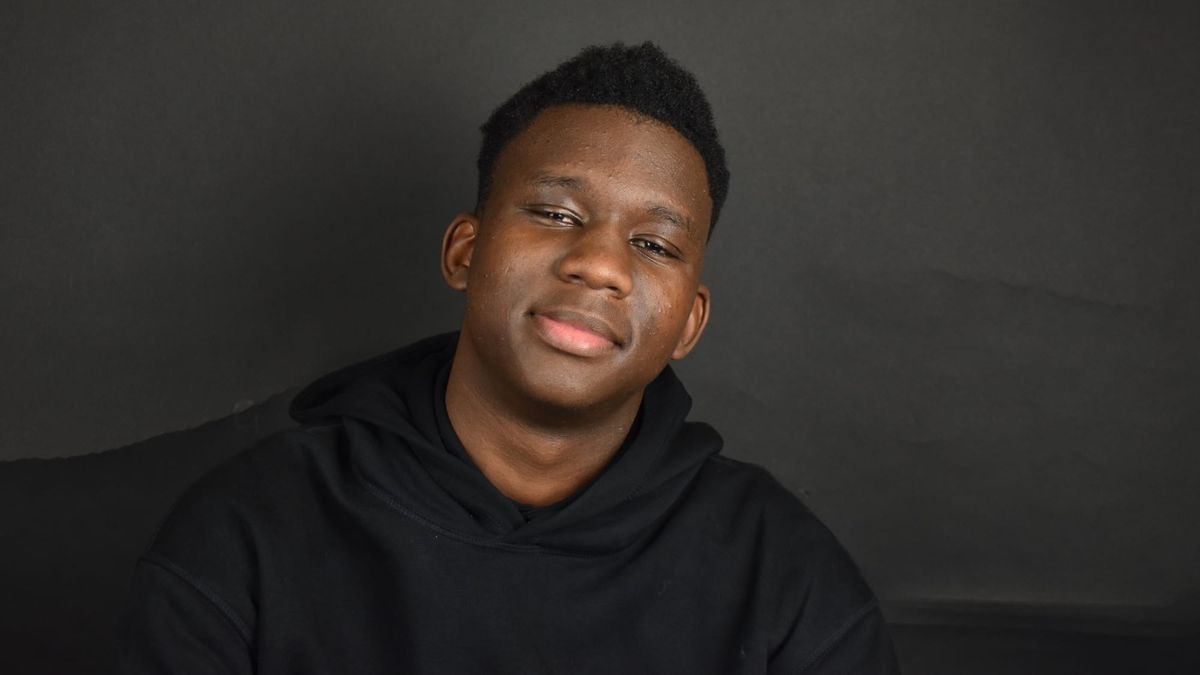
Darell Chipuru arrived in Ipswich from Zimbabwe not knowing anyone. He is now heading to Snape Maltings to drum alongside artists who tour the world. None of it was planned.

It started with a dare to himself.
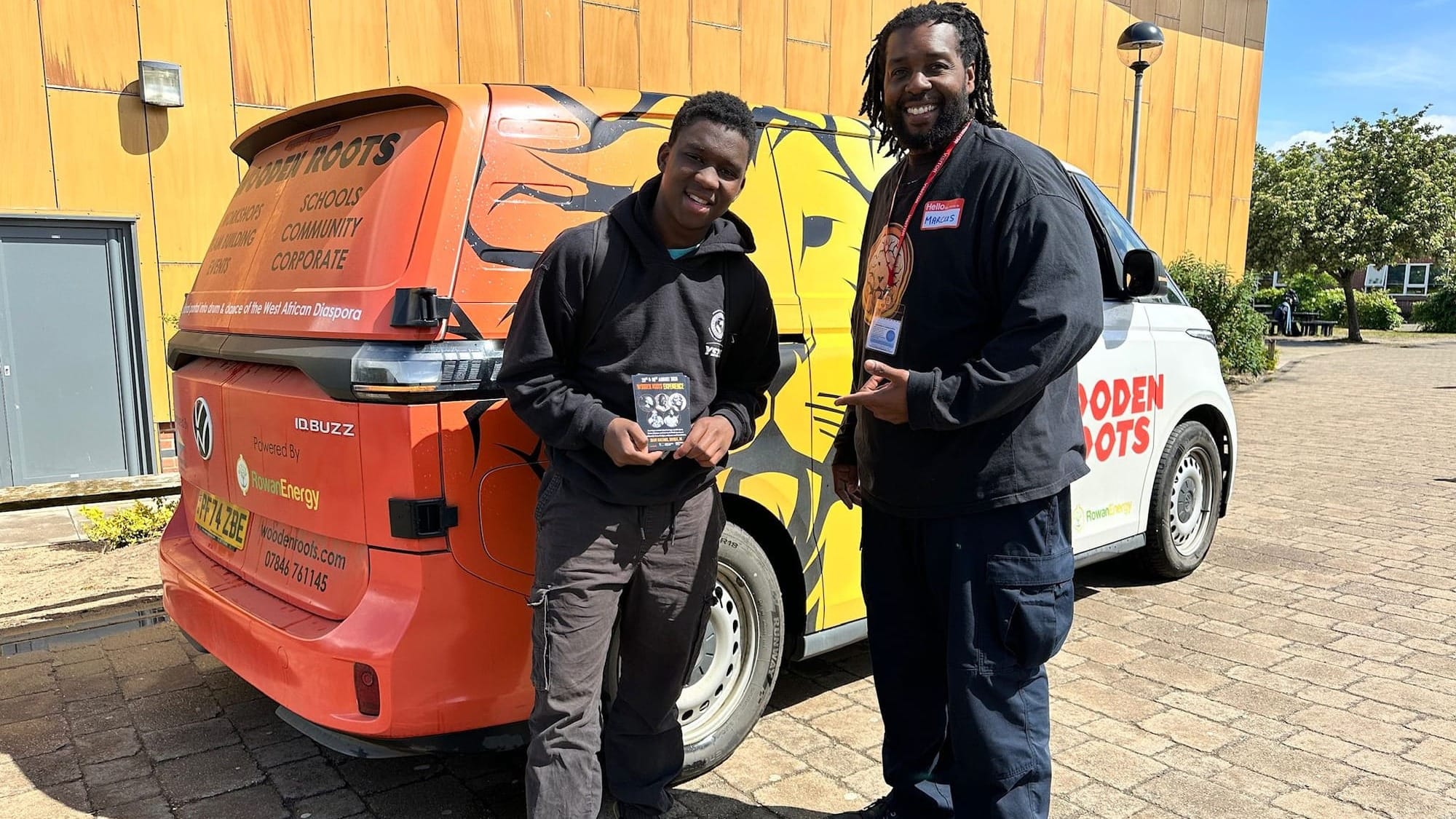
Darell Chipuru was at a school celebration event when he spotted Marcus Brown — founder of Wooden Roots, a man who has spent his career bringing West African drumming to communities across the UK — setting up a djembe.
Darell walked over. He asked if he could play. Marcus looked at him and said: "If you can follow my leads, let's see what you can do."
So Darell played. By the end, over 500 people had gathered around them.
That moment is the reason Darell Chipuru, 17, from Ipswich, is now heading to Snape Maltings in August to drum alongside internationally touring artists as a bursary recipient of the Wooden Roots Experience.
Arriving in Ipswich
Darell came to Ipswich from Zimbabwe with his mum and sisters when he was young.
"When I came to the UK I was just looking at the picture of it — it's the UK, it's the big thing. Then as you drive, you see all the houses look the same. Literally the entire street. And you start to settle and you start to see it differently. You start to see all the little cracks."
School, naturally, was difficult. He came in mid-way through his GCSEs and failed them first time. But his teachers worked with him. "Especially the non-white teachers," he says. "They knew how different it was, coming in and starting to learn a new language, trying to speak differently. They would sit down with me. Have conversations with me. So my English would get better and better."
"English back home is English. But speaking it is different. If I bring someone here and speak to them the way I spoke back home, they might not be able to understand me — but it's the same English. If you write it down, it's exactly the same."
The music department that became home
Darell didn't arrive in Ipswich as a musician. He picked drama and media for his options — something he describes as "wanting something easy" — and added triple science because he thought he should. He was, by his own admission, bad at it.
Then his music teacher heard him play the drums.
"He went and spoke to the school about getting me to change from triple science to music. But I think when he went and spoke to them, they were relieved that someone was taking me." He laughs. "They were like, 'Ah, don't bother coming to triple science. Can you go try with music?' I was like, okay, cool."
He went. He enjoyed it. And then he never left.
"In year 10 and year 11, I would be in the music department every single day. Break time, lunch time. You don't really have friends and stuff when you're new. So I started going there to make friends. And I liked it. It became a community. We sort of made it run as well."
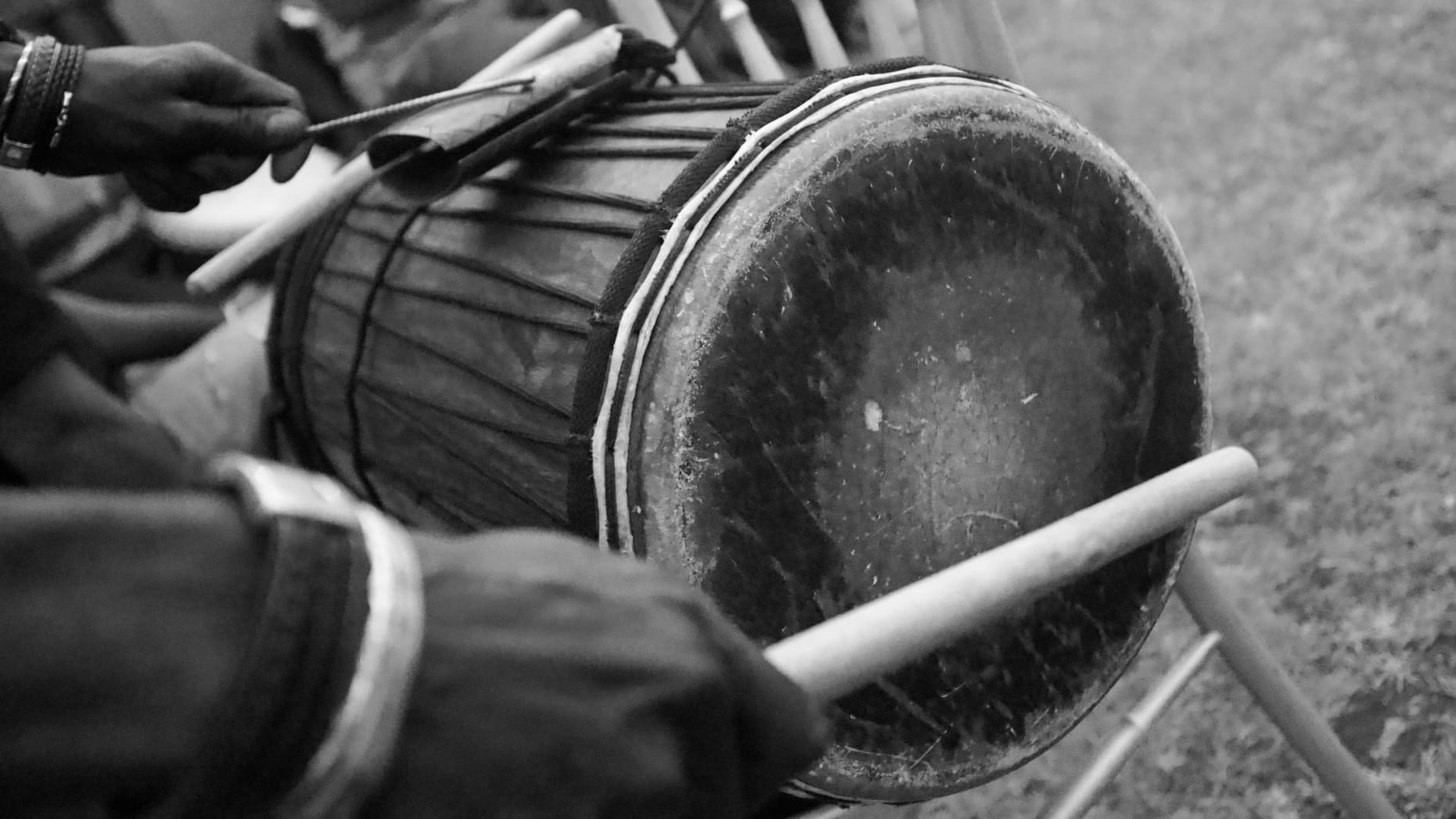
The department exposed him to everything. Drums led to bass. Bass led to marimba, kalimba, piano. Then, sound engineering.
"I don't even know where it came from, but I was always fascinated by people who mix and do live sound. They can just hear a sound and know what goes with it. And I thought — if they can do it, I can do it. So I started looking at it."
He now studies Music Performance and Production, specialising in sound engineering. He plays drums, bass, marimba, kalimba, piano and — most recently is learning to play the saxophone.
The language of music
Studying music production, and learning to play an instrument heart to heart are two different things. One thing is clear though: music is a language.
According to Darell: "You can read any book as long as you understand the language. You can learn any instrument as long as you understand music. My barrier is that I hate reading music. It puts you in a cage. You have to conform to one certain way of playing something. It doesn't give you room to express yourself."
He plays by ear instead, and more importantly, by feel. "Even if I'm playing something wrong, I know I like what I'm playing. That's just how I learned. That's just hard."
It's a similar point that drew Darell to West African drumming when he finally met Marcus Brown properly - the idea that drums tell a story, that music is a conversation.
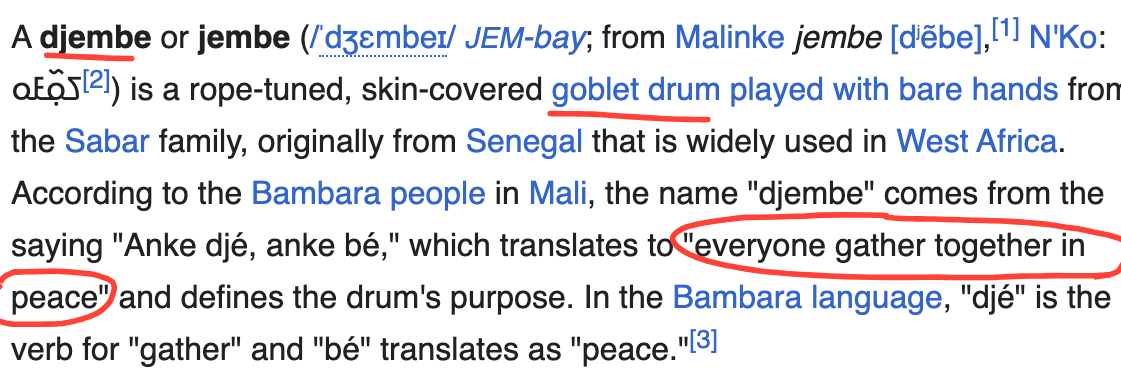
"The way they drum, the way they tell us — it speaks. The djembe is a talking drum. Everything we play means something. It's like many different people speaking different things at the same time, but when it gets to you, it sounds like one thing. One message."
The jam that started everything
After the school event, Marcus told him to stay in touch. Over the following months their paths kept crossing at local events around Ipswich — and eventually it was Darell who made the next move.
"I saw him and I went over. I said, 'I've been seeing the Wooden Roots Experience online — that's something I would want to do.' It was the fact of many African drummers in one place, sharing their culture, sharing their skills. To me, that's a place I really want to be."
Marcus said he'd see what he could do. A few weeks later he came back with a bursary place. Darell still says he can't quite believe it.
"It doesn't sound real. Those opportunities — they're quite rare. They don't give that to a lot of young people, especially young people like myself. So it's quite honouring."
The bursary covers the full weekend at Snape Maltings — workshops, accommodation, travel, food. He'll drum alongside artists who tour the world. He'll be there as part of the Wooden Roots team, not just as a participant.
"I'm not just coming to attend. I'm coming as part of Wooden Roots. I was like — yeah, man. Why not? It's not going to hurt anyone."
What comes next
Darell is already leading African drumming workshops himself — after our conversation, he was heading straight back to his old school to run one for their sports day. He talks about the next Wooden Roots Experience being full of young people, plural. He talks about Ipswich as a place that has always found a way to support him.
"Ipswich has lovely people who always find a way to see how they can help you in whatever it is you do. It might not be drumming, it might not be music related. But people find a way."
He wants other young people in Ipswich to feel that. To feel like there's something here worth reaching for.
"I never thought I'd be going to Snape Maltings to do African drumming. I never thought I'd see African drums and an orchestra come together at the same time. But that's how cool it is when you put yourself out there."
He pauses. "So I say — do it. Just put yourself out there and see what happens. Trust me. I'm a big testament to that."